Fort Siloso: The Gun Museum

64-Pounder RML Guns
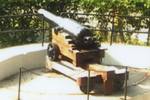 A 64 Pounder RML Gun near the entrance to the Fort. The two guns there are mounted on an emplacement originally built for two 12 Pounder QF Guns, and used during the Second World War for two Twin Lewis Guns. This emplacement is built on the site of the Fort's original No.1 7Inch RML Gun Emplacement
7-Inch RML Guns
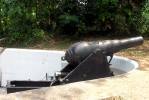 The 7 Inch RML Gun used for coast defence was developed from the type used by the Royal Navy, as indeed were many other coast artillery guns, such as the 68-Pounders at the Navy Museum at Changi and at Ladang on Pulau Tekong.
13 Inch Mortars
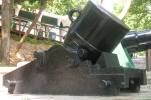 13 Inch Mortars were valued during sieges because of the high trajectory.
The five Trench Mortars on display were originally displayed in front of the Victoria Memorial Hall. Later they were moved to the National Museum, where they were placed outside. They were moved to the Fort in 1969.
25-Pounder Gun Howitzers
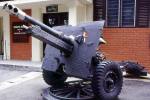 25 Pounder Gun Howitzer first brought into service by the British Army in 1939. It was widely used by British and other forces for many years in counter-battery, anti-personnel and anti-tank roles.
It was probably the best field artillery piece to see action anywhere during the Second World War.
8 Inch BL Gun
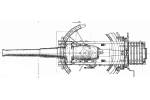 8 Inch BL Gun as emplaced at Mount Serapong and Fort Tanjong Katong.
One of four 8 Inch Guns emplaced in Singapore is displayed at Fort Siloso. Prior to the gun being displayed at Fort Siloso, it was mounted at Blakang Mati’s football field. It was brought to the Fort in 1974.
Mark IV 9·2 Inch BL Guns
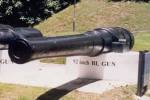 Mark IV 9·2 Inch BL Guns were emplaced, one at Fort Siloso and two at Fort Connaught on Blakang Mati. Two more were at Fort Pasir Panjang.
Japanese Guns
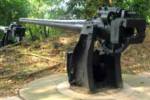 Japanese Guns recovered from areas of Singapore are also on display at Fort Siloso.
Muzzle Loading Cannon
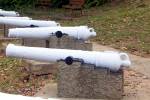 Muzzle Loading Cannon on display at the Fort.