Fort Siloso: The Guns of Singapore - Mark X 9·2 Inch BL Gun on Mark VII Mounting

Mark X 9·2 Inch BL Gun on Mark VII Mounting
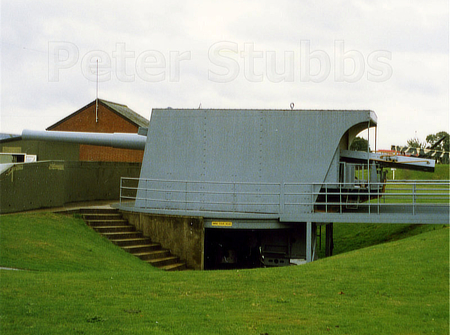
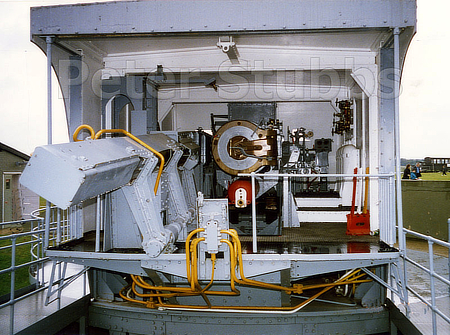
Mark X 9·2 Inch BL Gun at Imperial War Museum Duxford photographed in 1993
Sadly this gun has been allowed to deteriorate badly and is in a very poor condition.
The The various incarnations of the 9·2 Inch BL Gun were a mainstay of British coast artillery from the late 1800s to the disbanding of coast artillery in 1956. They were deployed world-wide. The Mark X 9·2 inch BL gun first entered service with the Royal Nay in 1899, and was soon taken up for coast artillery service by the newly formed Royal Garrison Artillery. The Mark X on a Mark VII mounting was deployed in places such as the UK, Singapore, Gibraltar, South Africa, Australia and Canada. Very few remain, with the majority of these being in South Africa.
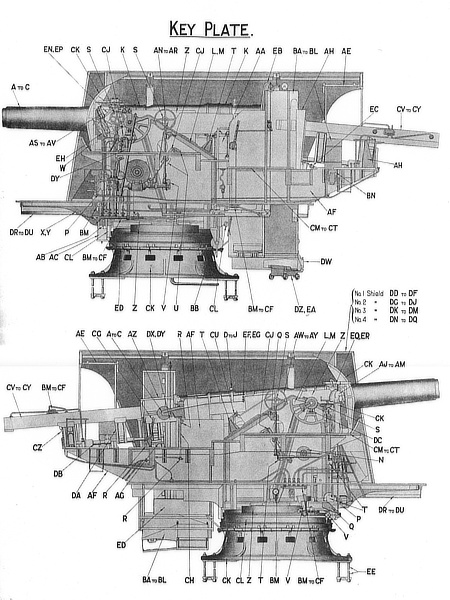
A cut away drawing of a Mark X gun
on a Mark VII Mounting
The Mark VII mountings allowed an elevation to 35° greatly increasing the range of the gun. The Fort Connaught guns had a range of 29,600 yards (27066m) and Tekong Besar 31,300 yards (28,620m). Both sets of guns were capable of a greater range, but were constrained by the range finding systems in use. The ammunition consisted of armour piercing and high explosive shells weighing 380lbs (172kg). The shells were propelled by two half charges of 60lbs (27kg)
In the 1930s, the Mark X with a Mark VII mounting came to Singapore and Fort Connaught and the Tekong Besar Battery each received three of the guns. Earlier Mark X guns on Mark V mountings at Fort Connaught, Mount Serapong, Serapong Spur and Mount Imbiah were retired. Even earlier Mark IV 9·2 inch guns on Mark I mountings were at Fort Siloso, Fort Connaught and Fort Pasir Panjang.
The guns were hydraulically operated with manual capability in the event of hydraulic failure. Power was supplied from diesel generators in an underground engine room. Ammunition was raised from the underground magazine onto the gun floor which was underneath the gun. Thirty shells ready to use were stored on a shelf running partially around the walls of the gun floor. Propellant cartridges were stored in steel doored lockers embedded in the walls. Also stored separately were the firing tubes which set of the propellant charge.
Ammunition was lifted to the gun by means of a lift. This took the shell and cartridges to the breech of the gun where a rammer pushed them into the barrel, shell first and then the cartridges. After the gun was fired, a blast of compressed air was directed into the barrel to clear any residue from the cartridges. A jet of water was directed onto the mushroom head of the breech block to cool it. The rate of fire was two rounds per minute. The gun could be fired by tugging on a lanyard attached to the breech assembly or it could be fired electrically. Each method had its own type of firing tube.
The gun crew consisted of five men. More men worked under the gun to supply ammunition. More were in the magazine sending ammunition to the gun floor.


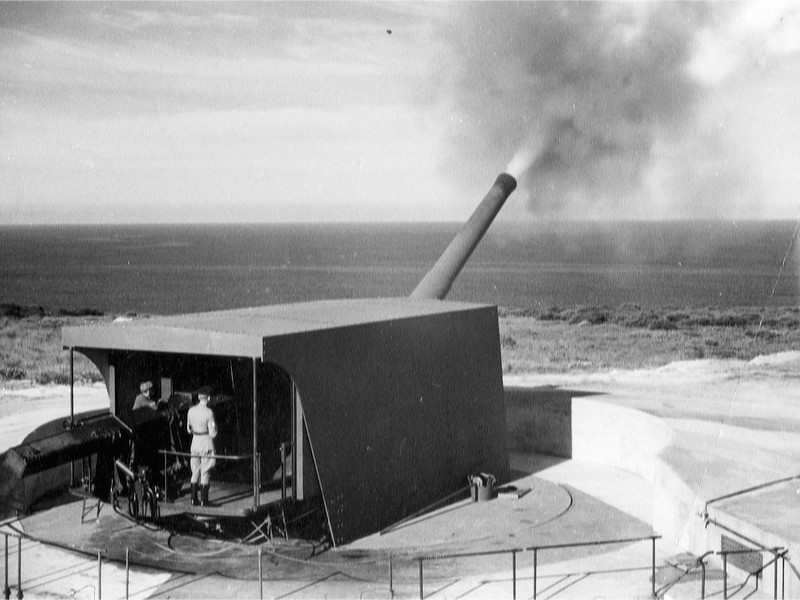
Firing a Mark X 9·2 inch BL Gun, Australian Defences
Photo: State Library of Victoria